
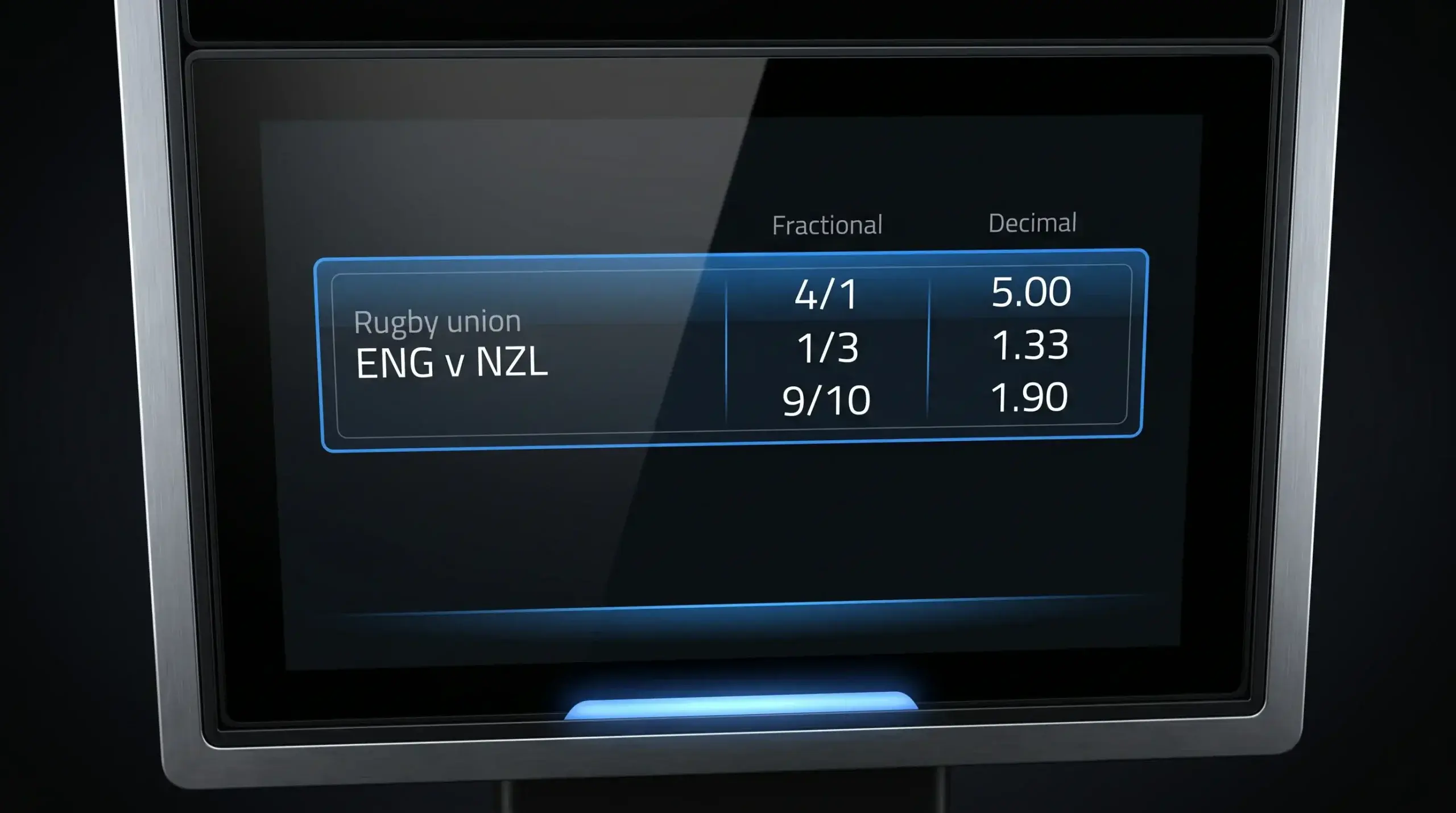

I once watched a newcomer back England at 4/6, convinced he’d found a generous price, then complain when his winning tenner returned less than seventeen quid. He’d read the number as money rather than as a ratio, and in that single misreading is everything that makes odds the most misunderstood part of betting. The price isn’t a prize. It’s a sentence written in a language you can learn in an afternoon.
This article teaches you to read that language in both dialects British bookmakers use, the traditional fractional form like 4/1 and the decimal form like 5.00, and to translate either into the thing that actually matters: the implied probability the bookmaker is selling you. We’re not covering bet types or handicaps here. We’re staying on the number itself, what it means, what it hides, and how to tell a fair price from a fleecing.
Six years of staring at rugby prices has taught me that punters who win consistently aren’t necessarily better at predicting matches. They’re better at reading prices. They know what a number implies, they know the bookmaker’s margin is baked into it, and they know how to compare the same selection across books to find the genuine value. That’s the skill set this guide hands you, starting with the format that’s confused British bettors for a century.
Reading Fractional Odds Without the Headache
Fractional odds are the format your grandfather used at the racecourse, and they persist in Britain for the same reason we still drive on the left: tradition, deeply embedded. They look like a fraction because they are one, and once you see what the two numbers represent, the fog lifts permanently.
Take a price of 4/1, spoken as “four to one”. The number on the left is what you win, the number on the right is what you stake to win it. So 4/1 means for every £1 you stake, you win £4 in profit, plus your original pound back. A £10 bet at 4/1 returns £50: £40 profit and your £10 stake. Simple enough when the right-hand number is one. The wrinkle, and the thing that tripped my newcomer, is when it isn’t.
Consider 4/6. Here you win £4 for every £6 staked. The selection is what’s called odds-on, meaning the bookmaker rates it more likely than not, so you risk more than you stand to win. A £6 stake returns £10 total: £4 profit plus your £6 back. Scale that to a tenner and you win roughly £6.67 profit, returning about £16.67. That’s why my friend felt short-changed. He saw a four and expected a windfall, but 4/6 is a short price on a strong favourite, exactly the kind of price rugby throws up constantly because the sport is so dominated by a handful of powerful sides.
The mental trick that makes fractional odds instant is this: divide the left number by the right, and that’s your profit per pound staked. 4/1 gives 4, so £4 profit per £1. 4/6 gives 0.67, so 67p profit per £1. 11/4 gives 2.75, so £2.75 profit per £1. Once you internalise that one operation, every fractional price in the country becomes legible at a glance, whether it’s a Six Nations favourite at 1/3 or a long shot at 25/1.
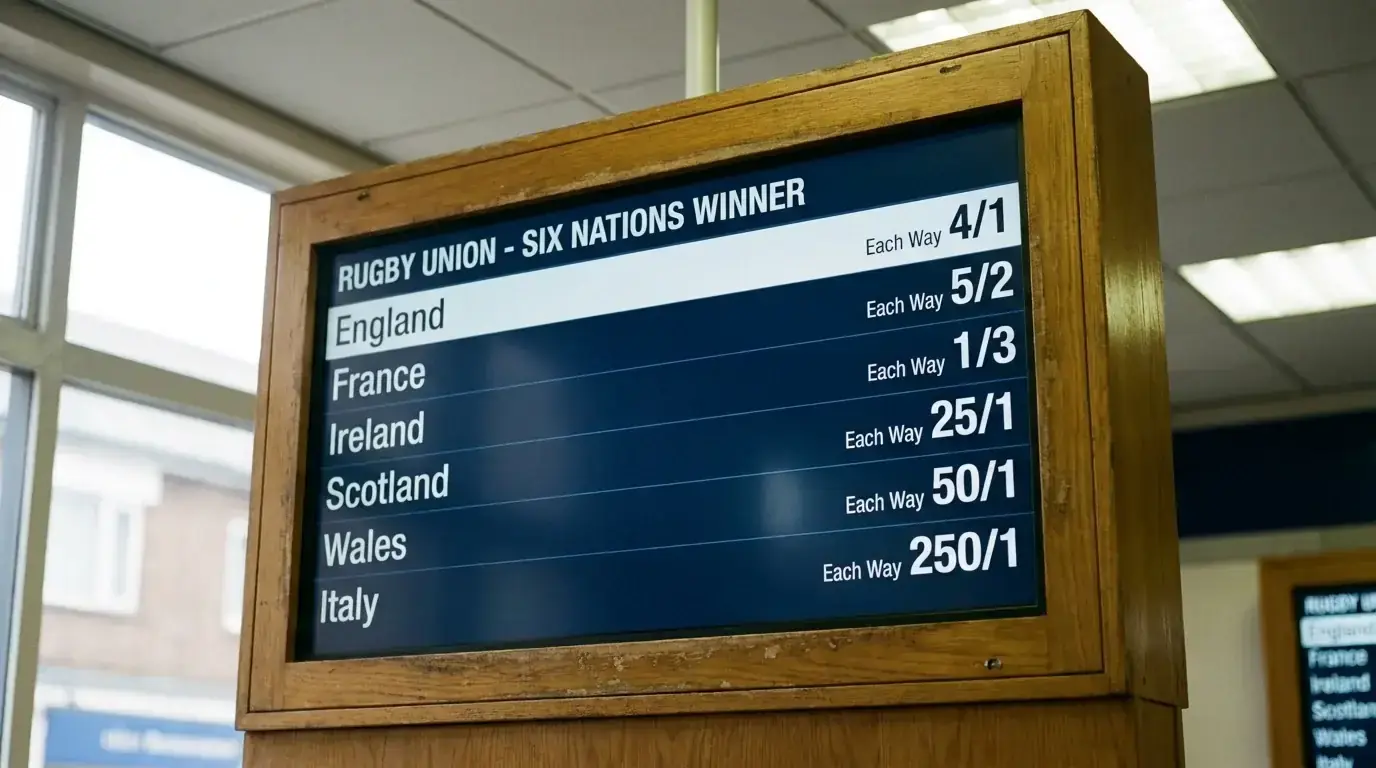
Rugby markets lean heavily on fractional odds for the headline match result, and you’ll see prices like 1/2, 8/13, and 6/4 thrown around for the favourites and underdogs in any given Premiership fixture. They’re not trying to confuse you. They’re just speaking the old language. The instant you can read the ratio as profit per pound, you’re fluent.
Decimal Odds and Why So Many Punters Prefer Them
The first time I switched my account to decimal odds, my betting got measurably calmer, because decimal prices remove the one mental step where fractional odds cause errors. Decimal odds tell you the total return per pound staked, stake included, in a single clean number. No ratios, no dividing, no “is this odds-on or odds-against” hesitation.
A decimal price of 5.00 means a £1 stake returns £5 in total: £4 profit and your £1 back. So 5.00 is the exact same price as fractional 4/1, just expressed as the whole return rather than the profit. A £10 bet at 5.00 returns £50, the identical outcome to 4/1, written more transparently. The decimal number is always the multiplier you apply to your stake to get your total return, which is why it’s become the default on most modern apps and the standard across Europe.

The favourite that looked awkward in fractional form becomes obvious in decimal. That 4/6 price is 1.67 in decimal. A £10 stake times 1.67 returns £16.67, and you can see at a glance that you’re getting less than double your money, which is precisely what a strong favourite should pay. There’s no danger of misreading it as something generous, because the number itself is below 2.00, and anything below 2.00 is, by definition, odds-on. That threshold is the single most useful landmark in decimal odds: 2.00 is even money, the point where profit equals stake. Above it, you’re backing an underdog and risk less than you’d win. Below it, you’re backing a favourite and risk more.
For rugby specifically, decimal odds shine because the sport produces so many extreme prices. When a top nation faces a minnow, the favourite might be 1.05 and the outsider 13.00. In fractional those become 1/20 and 12/1, which most people can’t compare at a glance. In decimal, 1.05 versus 13.00 instantly tells you the market thinks one side is overwhelmingly likely and the other a genuine long shot. The clarity matters most exactly when the gap is widest, and rugby’s gaps are wide.
Most UK sites let you toggle between the two formats in your account settings, and I’d encourage every beginner to keep both visible until the fractional readings become second nature. There’s no virtue in struggling with tradition for its own sake. Use whichever format lets you read the price fastest, because speed of comprehension is what stops you from making the misreading that costs you.
Converting Between the Two Formats
You’ll constantly meet both formats in the wild, sometimes within the same betting site, certainly across different ones, so being able to translate on the fly is a genuinely useful skill rather than an academic exercise. The conversion is two short sums, and once you’ve done each a few times they stop being sums and start being recognition.
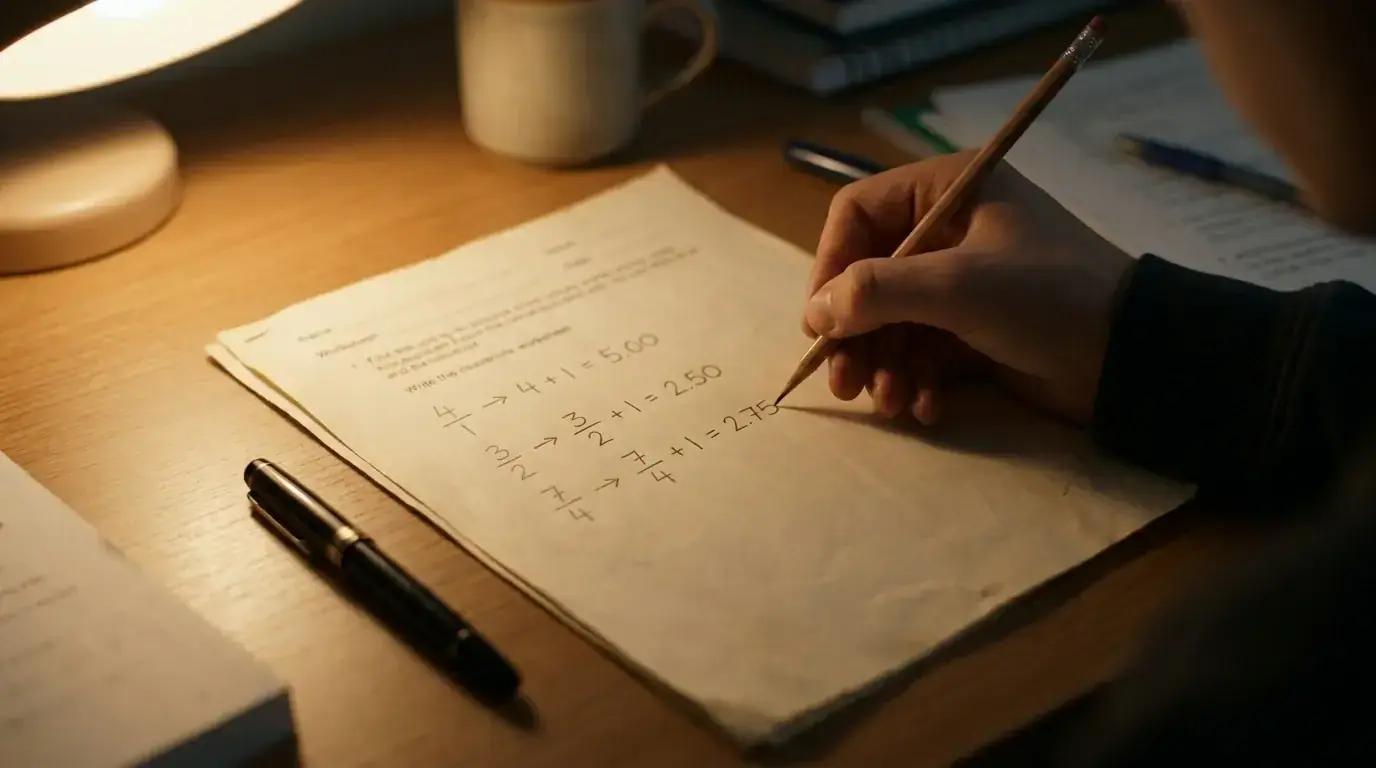
To turn fractional into decimal, divide the left number by the right and add one. The “add one” is the bit people forget, and it’s the step that folds your returned stake into the number. So 4/1 becomes 4 divided by 1, which is 4, plus 1, giving 5.00. And 6/4 becomes 6 divided by 4, which is 1.5, plus 1, giving 2.50. And 4/6 becomes 0.667, plus 1, giving 1.67. The plus-one is always there because decimal odds include your stake while fractional odds don’t.
To go the other way, decimal into fractional, subtract one and then express the result as a fraction. A decimal of 5.00 minus 1 is 4, which as a fraction over one is 4/1. A decimal of 2.50 minus 1 is 1.5, which becomes 3/2, more commonly written 6/4 in betting shorthand. A decimal of 1.67 minus 1 is 0.67, which works out to roughly 4/6 or 8/12. The fractional form often gets tidied into conventional racing fractions, which is why you’ll see 6/4 rather than 3/2 and 11/8 rather than 1.375.
Here’s a small reference set worth committing to memory, because these prices recur endlessly in rugby. Even money is 1/1 fractional and 2.00 decimal. A common favourite price of 4/6 is 1.67. A short price of 1/2 is 1.50. A solid underdog at 6/4 is 2.50. A bigger outsider at 4/1 is 5.00. And a genuine long shot at 10/1 is 11.00. Learn that handful and most rugby prices you meet will already be familiar before you’ve done any arithmetic.
The reason conversion matters in practice is comparison. If one book shows you 6/4 and another shows you 2.55, you cannot tell which is better until you’ve put them in the same language. Convert the 6/4 to 2.50 and the answer’s plain: 2.55 is the better price, paying more for the same outcome. Without the conversion, you’re guessing, and guessing on prices is how punters quietly bleed value all season.
Turning Odds Into Implied Probability
This is the section that changes how you bet, so I’ll slow down. Every price is a probability in disguise, and learning to strip away the disguise is the difference between betting on feel and betting on judgement. When a bookmaker offers 2.00, they’re telling you they think the outcome has a 50% chance. The price and the probability are two faces of the same coin.
The sum is mercifully simple with decimal odds: divide 100 by the decimal price and you get the implied probability as a percentage. So 2.00 gives 100 divided by 2, which is 50%. A price of 4.00 gives 100 divided by 4, which is 25%. A price of 1.50 gives 100 divided by 1.5, which is about 67%. The shorter the price, the higher the implied probability, which is just another way of saying the more likely the bookmaker thinks something is, the less they’ll pay you for it.
This is the lens that exposes value. If you’ve watched a Premiership side closely and you reckon they’ve genuinely got a 60% chance of winning a match, but the bookmaker is offering 2.00, implying only 50%, then you’re being offered a price more generous than your own assessment. That gap is value, and value bet repeatedly over a season is what separates winning punters from the rest. Conversely, if the price implies 70% and you honestly think it’s nearer 55%, you walk away, however much you fancy the team emotionally.
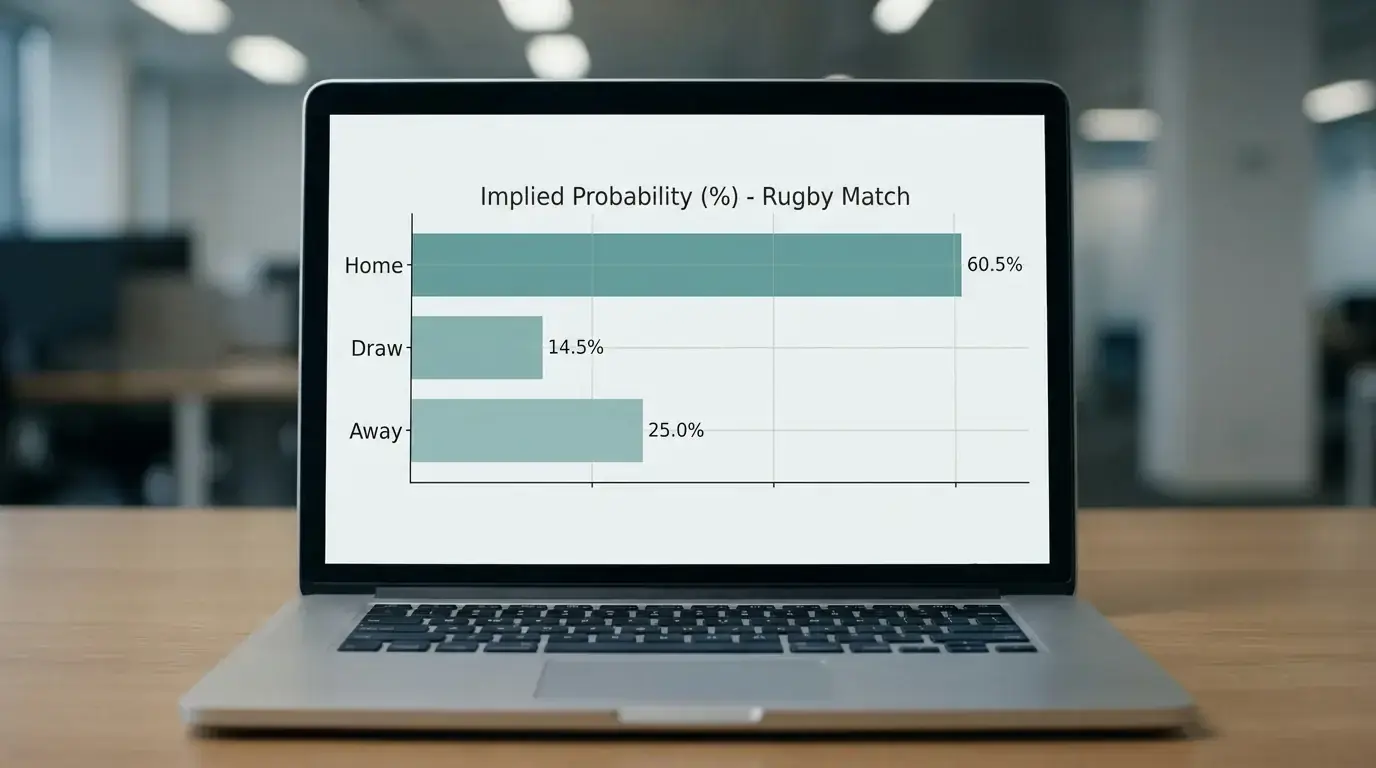
Rugby is fertile ground for this kind of thinking precisely because it’s structurally predictable. A small group of dominant nations and clubs win the overwhelming majority of meaningful matches, which means the favourites are genuinely strong favourites and the implied probabilities they’re priced at are often very high. The skill isn’t spotting that the best team will probably win, the market knows that, it’s spotting the matches where the price has drifted slightly away from the true probability, where a favourite is a touch too cheap or an underdog a fraction too generous.
Try it as a habit. Before you back anything, convert the price to an implied probability and ask yourself honestly whether you’d put your own number higher or lower. If higher, there’s value and a case for the bet. If lower, there isn’t, no matter how much you want there to be. This one discipline, performed before every wager, will improve your betting more than any tip, any system, or any hunch you’ll ever have. The number tells you what the bookmaker believes. Your job is to know when you believe something different, and why.
The Overround and the Bookmaker’s Built-In Edge
Add up the implied probabilities of every outcome in a market and you’d expect them to total 100%, because something has to happen. They never do. They always add up to more, and that excess is the bookmaker’s profit margin, hiding in plain sight inside the prices. Understanding this single fact is what stops you thinking the odds are a neutral reflection of reality. They are not. They are a product, priced to sell at a profit.
Picture a two-way market, say a rugby match priced without a draw for simplicity, where each side is offered at 1.90. Convert each: 100 divided by 1.90 is about 52.6%. Two outcomes at 52.6% sum to 105.2%, not 100%. That extra 5.2% is the overround, sometimes called the vig or the margin, and it’s the bookmaker’s edge. If the market were priced fairly with no margin, both sides would be 2.00, summing to exactly 100%. The shading from 2.00 down to 1.90 is the house taking its cut.
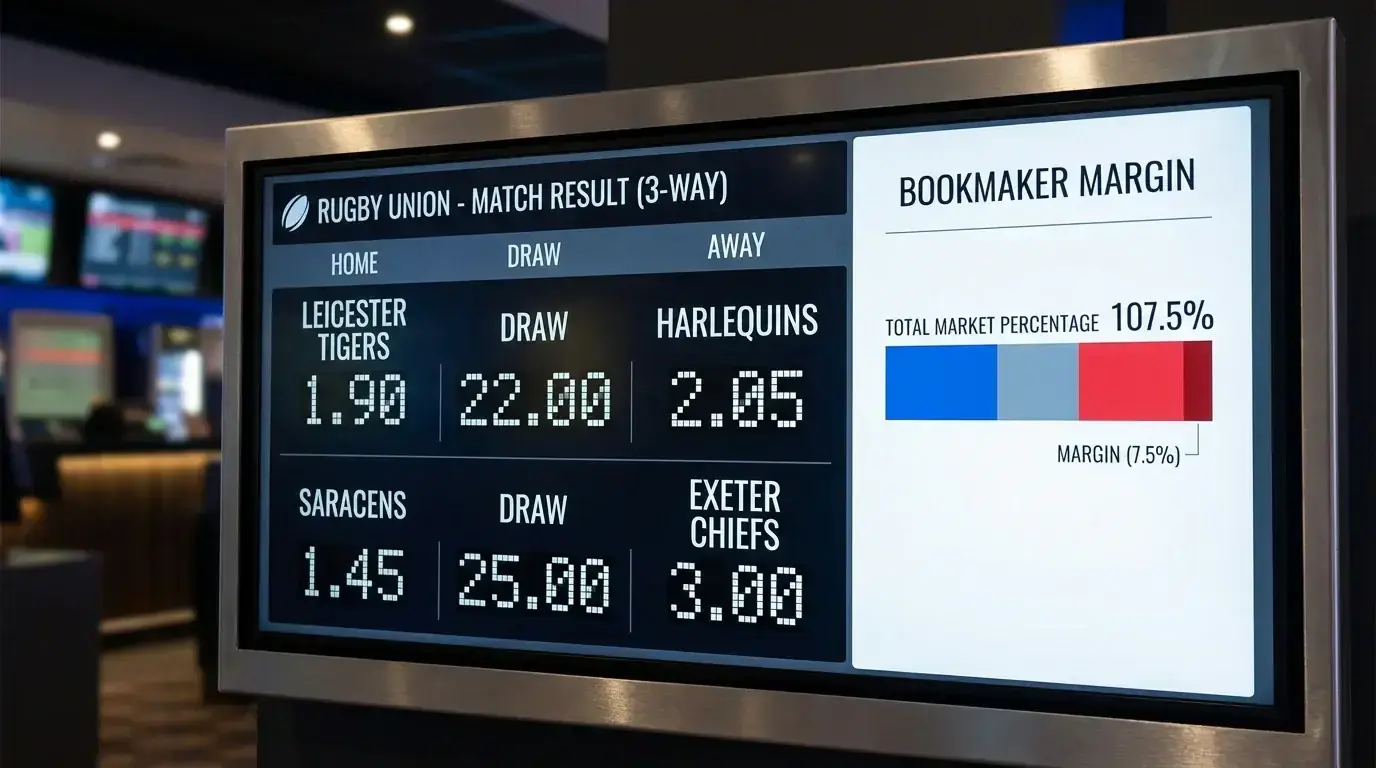
The scale of this matters enormously over time. Remote betting in Britain generated £16.8 billion in gross gambling yield in 2025, the largest single segment of gambling in the country, and every penny of that yield is, in essence, accumulated overround. The bookmakers aren’t gambling. They’re running a margin business, and the overround is the margin. Your task as a punter is to bet into the markets where that margin is thinnest and your own judgement is sharpest.
The practical lesson is to favour low-overround markets and shop for the books that price them tightest. A market with a 105% overround is taking less from you than one priced at 112%, and over a season of bets that difference compounds into real money. The biggest, most liquid rugby markets, the match results on the marquee Six Nations and Premiership fixtures, tend to carry the lowest overrounds because competition between books forces the margins down. The obscure markets on minor matches carry fatter margins because the bookmaker has less competition and less confidence, and passes both costs to you.
You can’t escape the overround entirely, it’s the price of admission. But you can minimise it, and recognising it for what it is changes how you read every price. A short favourite isn’t just unlikely to pay much, it’s also carrying the book’s margin on top of its true probability, which makes piling into heavy odds-on favourites a slower, surer way to lose than it first appears.
Comparing Prices Across Operators
The most reliable edge available to an ordinary punter has nothing to do with predicting rugby and everything to do with refusing to accept the first price you see. The same selection, the same match, the same outcome, is priced differently across bookmakers, and taking the best available number is free money that most people leave on the table out of laziness.

The structural reason this works is that British punters already spread themselves across multiple books. UK online gamblers hold three operator accounts on average, and more than half are registered with more than one, which tells you the multi-account habit is mainstream rather than niche. The reason they do it isn’t only welcome offers. It’s that prices genuinely diverge, and the punter with three accounts can take 2.10 at one book when another is offering only 2.00 on the identical bet. As the Techopedia gambling editor Raymond Van Wyk observed, expert-reviewed UK bookmakers tend to offer a wider range of betting markets, from popular events through to more niche tournaments, and that breadth is part of why the prices differ: each book is making its own independent judgement.
Let me make the value concrete. Suppose you back the same handicap selection forty times across a season at an average price of 2.00, staking £10 each time. Now suppose, by checking two or three books each time, you’d averaged 2.07 instead, a small and entirely realistic improvement. On your winning bets, that extra 0.07 of decimal odds returns an additional 70p per winning tenner, and across a season that quietly adds up to a meaningful sum, all earned without predicting a single result more accurately. Line shopping is the closest thing to a guaranteed edge that exists in betting.
The practical method is straightforward. Hold accounts at two or three UKGC-licensed books, and before you confirm any bet, glance at the price across all of them. Take the best one. It takes seconds and it costs nothing. Britain processes around 290 million online bets every month across these operators, and the prices on the same rugby selection will not match across all of them, so the punter who checks is structurally advantaged over the one who doesn’t.
One caution worth stating plainly. Multiple accounts are a tool for taking better prices, not a licence to bet more often or stake more heavily. The value of line shopping is real, but it evaporates the instant the extra accounts simply mean extra betting. Use the accounts to sharpen the prices on the bets you were going to place anyway, never to multiply the number of bets. The edge lives in the price, not in the volume.
How Odds Behave in Rugby Specifically
Everything above applies to any sport, but rugby bends the prices in characteristic ways, and knowing the shape of those bends helps you read a card faster. Rugby is a structurally predictable game, dominated by a small set of elite nations and clubs, and that predictability writes itself into the odds in ways football’s chaos never does.
The most visible effect is extremity of price. When dominance is this entrenched, the favourites are priced very short and the underdogs very long, far more so than in a sport where upsets are routine. You’ll see top sides at 1.10 or shorter and minnows at 10.00 or beyond in international mismatches, prices that simply don’t appear in the tighter, more random world of league football. This is why so much rugby betting gravitates away from the match result and towards the handicap and total points, where the margin of victory rather than the bare result becomes the question. With around 60% of all rugby bets landing on match outcome and margin markets combined, the sport’s punters have collectively discovered that betting the margin is where the interesting prices live when the result itself is close to a foregone conclusion.
The other rugby-specific feature is how prices respond to information. Team announcements matter enormously in rugby because a handful of key players, a world-class fly-half, a dominant back row, swing outcomes more than a single footballer typically does. When a marquee name is rested or injured, the price moves sharply, often hours before kick-off when the team sheet drops. A punter who understands that the number reflects probability can read those moves: a favourite drifting from 1.50 to 1.70 after a team announcement is the market telling you it now rates them meaningfully less likely to win, and the implied probability has fallen accordingly.
Liquidity shapes the prices too. The big tournaments draw enormous money, the Six Nations alone generated over $135 million in broadcast media value in 2025, and that scale of attention concentrates betting into the marquee fixtures. High liquidity means tight overrounds and stable, well-formed prices on the big games, while obscure fixtures carry wider margins and odds that can lurch on small amounts of money. As a reader of prices, you want to do most of your work in the liquid markets, where the numbers are sharpest and the margins thinnest.
Read enough rugby cards and the prices start to tell you a story before you’ve checked a single team-sheet. A market that’s all heavy odds-on favourites and long-shot underdogs is a tournament of mismatches, where the handicap is where the game is. A card of prices clustered near 2.00 is a round of genuine contests, where the match result itself carries value. The odds are not just a tariff. They’re a map of the weekend’s rugby, drawn in probability, and once you can read the map you’ll never look at a price the same way again. If you want to put that reading to work on the market where it pays off most, the logic of backing the line rather than the moneyline is the natural next step.
