
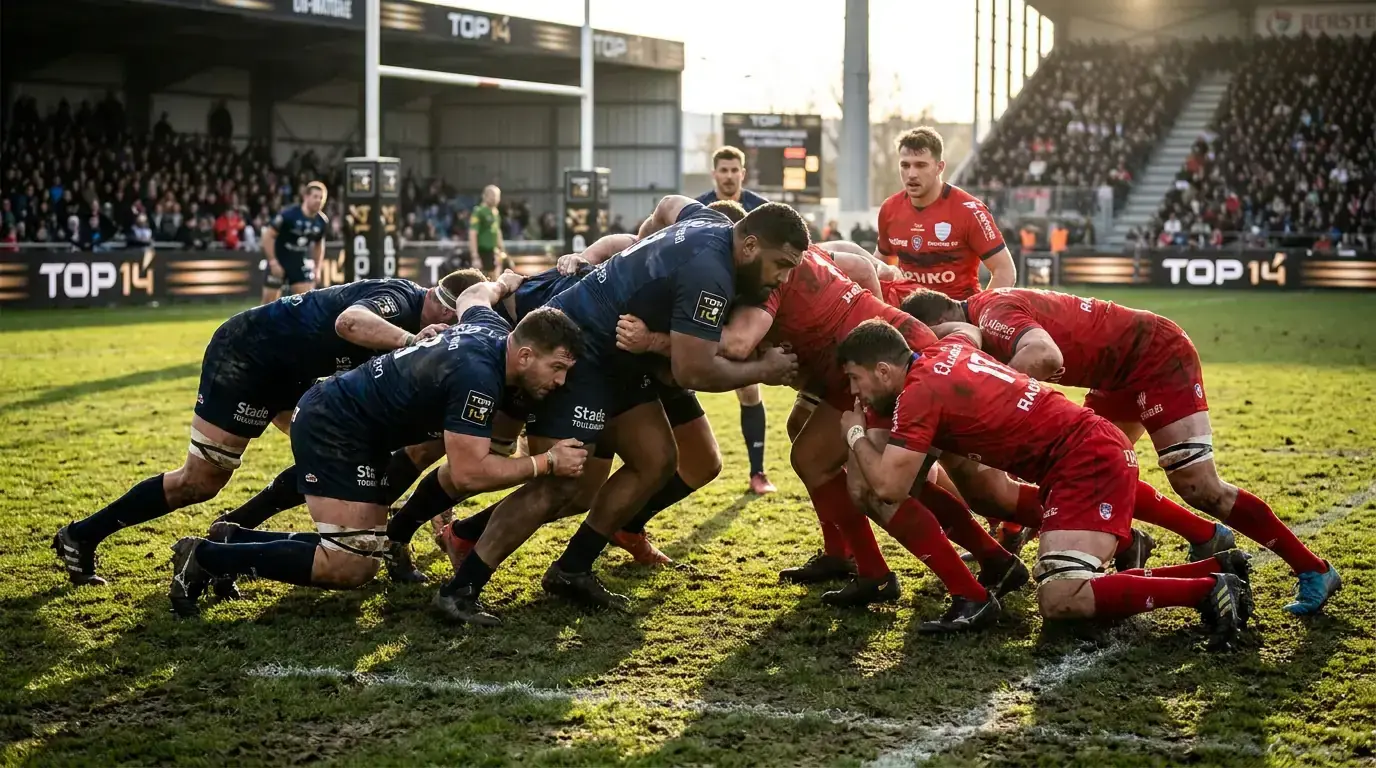

The first rule I learned about betting French rugby is that the away team often turns up to lose, and the bookmakers know it. Nowhere in European club rugby is home advantage as brutal or as bankable as in the Top 14, where travelling sides routinely rest key players and treat road trips as damage-limitation exercises. If you bet the French league the way you bet the English Premiership, you will systematically underprice the home team, and the league will punish you for it week after week.
This is the richest, deepest and arguably most physical club competition in the world, and its betting profile is shaped by money, squad depth and a fixture-list culture that has no real equivalent elsewhere. The Bouclier de Brennus, the shield awarded to the champion, is decided by a knockout phase finale after a long, gruelling regular season. Understanding why French clubs behave the way they do, especially at home, is the key to reading a market that rewards local knowledge over reputation.
How French club rugby is organised
The Top 14 takes its name from its fourteen clubs, and that large field combined with deep squads produces a longer, more attritional season than its English or cross-border rivals. The structure feeds directly into how every market should be read.
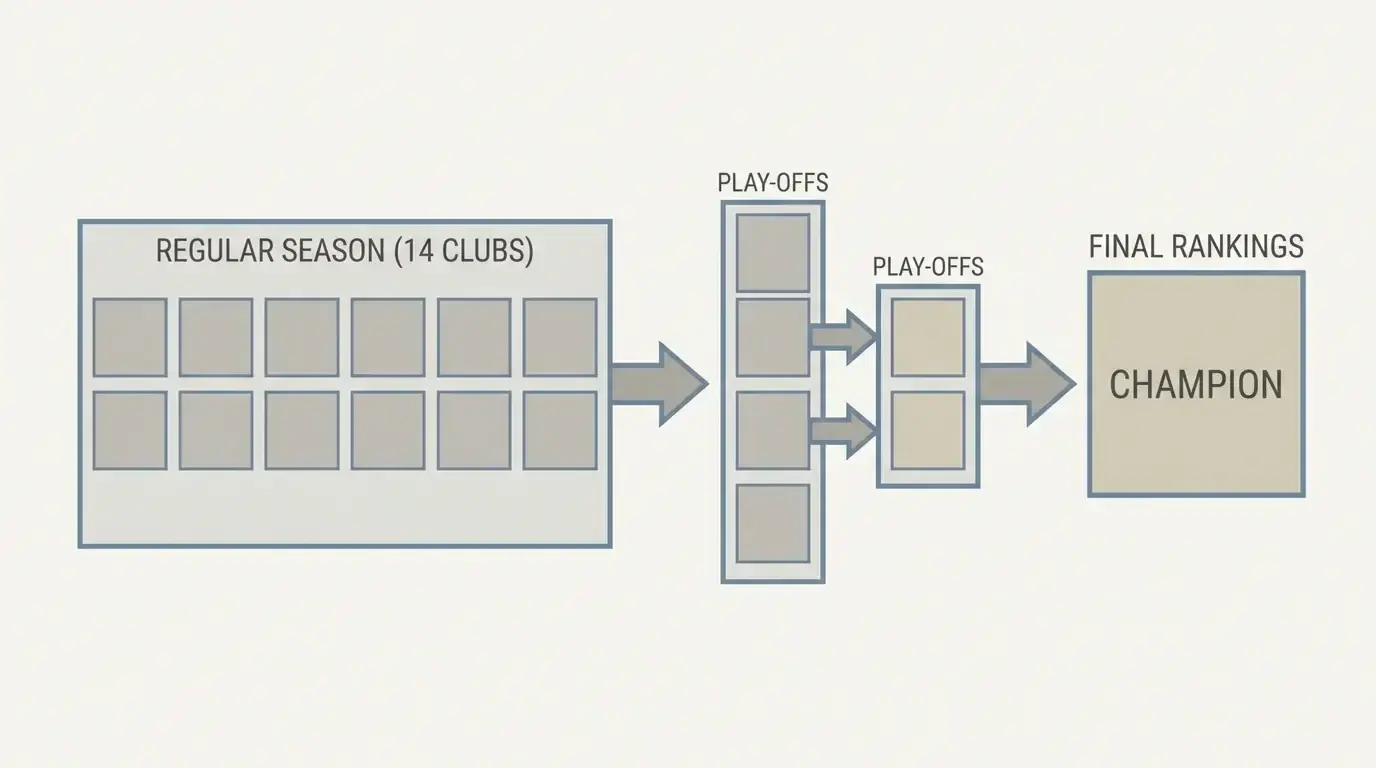
Fourteen clubs play a full home-and-away regular season, accumulating league points before the top finishers enter a knockout play-off, the phase finale, that culminates in a final for the Bouclier de Brennus. The higher seeds earn advantages through the play-offs, and the depth of the league means the talent gap between top and bottom is narrower than the table sometimes suggests, because even mid-table French clubs carry squads stacked with international talent funded by the competition’s considerable wealth. Relegation at the bottom adds jeopardy that keeps late-season fixtures meaningful even for clubs out of title contention.
For a punter, the headline feature is squad rotation. French clubs manage enormous playing rosters across a long, physical campaign, and they prioritise ruthlessly: home matches and the title run-in get the strongest XV, while away trips and dead-rubber fixtures often see heavy rotation. That selection culture is not a quirk to note and forget; it is the single biggest factor in pricing a Top 14 match. A team’s quality on paper tells you little until you know which version of it is travelling, and the strongest squads can field near-reserve sides in fixtures they have quietly written off. Reading the team sheet, and the context that shapes it, matters more here than in any other major league.
Why home advantage dominates the market
Home advantage exists everywhere in rugby, but in the Top 14 it is a structural force rather than a marginal edge, and it is the first thing I price on any French fixture. The gap between a club at home and the same club away is wider here than anywhere else I bet.

Several factors stack together. The travel within France is real, but the bigger driver is selection: clubs frequently rest senior players for away games, especially long trips or fixtures sandwiched between more important matches, so the away side is often genuinely weaker than its squad suggests. Add passionate home crowds, intimidating venues and referees who, consciously or not, feel the atmosphere, and the home team enjoys an advantage that the moneyline rarely fully captures. The result is that home favourites in the Top 14 win at a rate that surprises punters used to more balanced leagues, while away wins, particularly by sides that have rotated, are scarcer than the headline team quality implies.
This shapes how I attack the market. The handicap is where the home-advantage edge becomes actionable, because the line often sits short of the real performance gap once you account for away rotation, making the home handicap a recurring value play in fixtures where the visitor has clearly prioritised elsewhere. I am especially interested in mid-table clashes where a strong home side hosts a rival that has a bigger fixture the following week, the classic setup for a rested, under-strength travelling team. Conversely, I treat away-win bets with caution unless I have specific evidence the visitor is taking the fixture seriously with a full-strength side. Home advantage is the gravity of the Top 14 market, and betting against it without good reason is a slow way to lose. For a contrast with a league where travel works very differently, my analysis of betting the Gallagher Premiership shows how English club rugby prices its own play-off structure.
Match markets and the road to the Brennus
The Top 14 offers the full domestic-rugby market suite, and because regional and domestic competitions drive more than half of all rugby betting turnover, the French league’s coupons are deep on its bigger fixtures. Match result, handicap, total points, winning margin and try-scorer markets all run week to week.
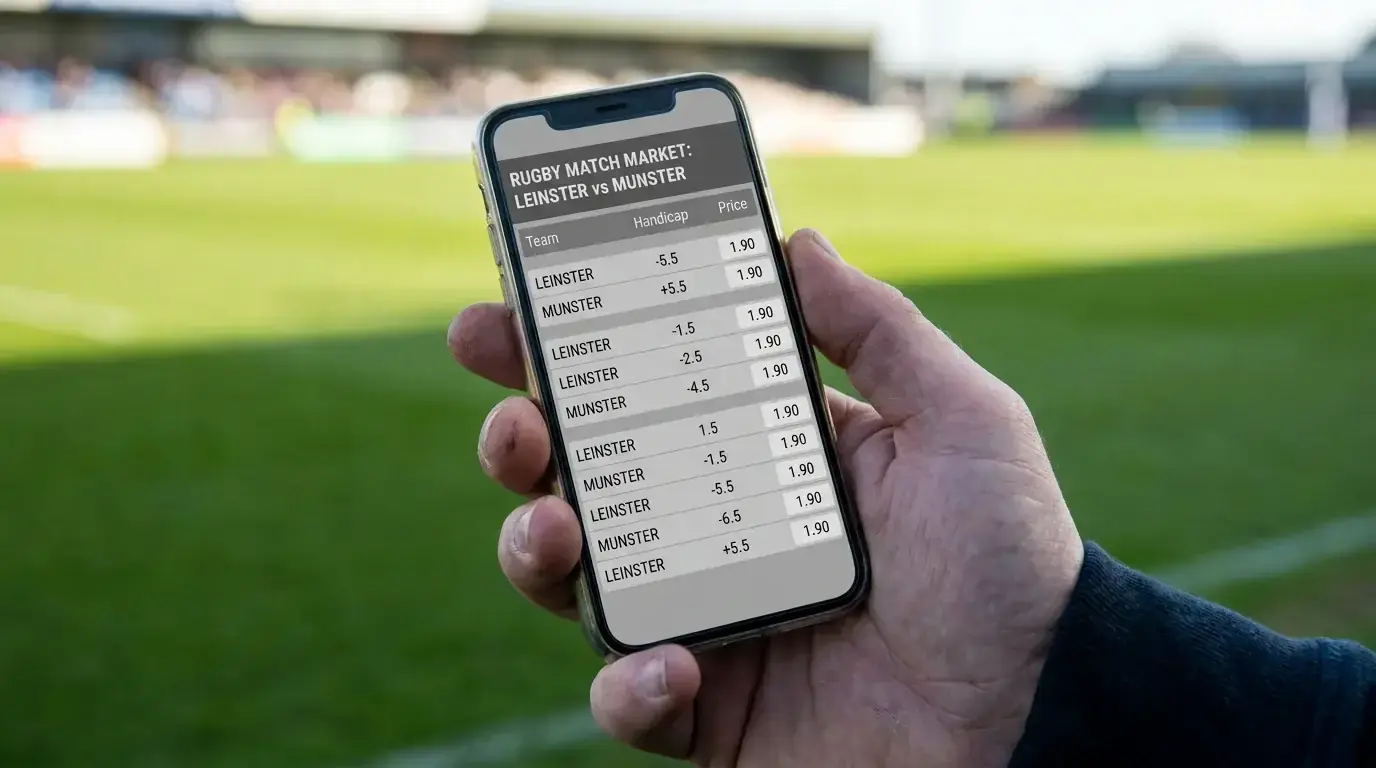
Beyond the handicap, the totals market carries a French accent worth understanding. Top 14 rugby can swing between the expansive, high-scoring attacking play of the wealthier clubs and the grinding, set-piece-dominated approach favoured in tighter contests, so the over/under demands knowledge of the specific matchup and the conditions rather than a league-wide assumption. Winter fixtures in the wetter regions compress totals, while a dry day between two attacking sides lifts them. The try-scorer markets reward the same positional logic as anywhere, but with the added wrinkle that rotation can pull a club’s first-choice finishers out of an away line-up entirely, so the team sheet is non-negotiable reading before staking.
The outright market for the Bouclier de Brennus is a two-stage bet, as in any play-off-decided league: a side must finish high enough to earn favourable seeding and home knockout fixtures, then win the phase finale. Because home advantage is so dominant, securing home play-off matches is enormously valuable, which means the outright price should reward teams capable of finishing near the top rather than simply the most talented squad. I treat “to reach the final” markets as often better value than the outright winner, because buying a strong club’s path through one knockout game, ideally at home, prices more kindly than backing it to win the whole thing once the showpiece nears. The road to the Brennus runs through home advantage, and the outright market that ignores that is the one to fade.
Locating value in the French game
The Top 14’s complexity is a gift to the punter willing to do French homework, because the rotation culture creates predictable mispricings that casual bettors miss entirely. The edge here is informational, not statistical.

In a UK betting landscape where football dominates with around £1.1 billion in gross gambling yield and both rugby codes hold steady demand, the Top 14 is followed by a smaller, more dedicated British audience than the Six Nations pulls in, which means the casual money that distorts marquee markets is thinner and analysis matters more. My value-hunting concentrates on three recurring spots. First, away rotation: identifying fixtures where a visiting club has clearly prioritised another match and backing the home side on the handicap. Second, fixture congestion: French clubs juggle domestic and European commitments, so a team facing a big European tie the following week is a candidate to rest players in the league. Third, the run-in motivation gap, where clubs safe from relegation but out of play-off contention have little to play for against rivals fighting for their seasons. Read the selection culture, watch the calendar, and the Top 14 rewards the punter who understands that in French rugby, who turns up matters as much as who is good.
