

I have a note pinned above my desk from the last World Cup cycle that simply reads “more teams, more rounds, more rope for outsiders.” Australia 2027 is the first men’s Rugby World Cup expanded to 24 teams, and that single structural change rewrites the futures market more than any rule tweak I have seen in six years of pricing rugby. If you are still modelling 2027 on the old 20-team template, you are pricing the wrong tournament.
The expansion is not cosmetic. For the first time since 1999 the field grows beyond 20, a brand-new round of 16 enters the bracket, and the whole event compresses into a tighter six-week window from 1 October to 13 November 2027. Each of those changes pulls on the outright and ante-post markets in a different direction, and the punters who map them early will be backing value before the prices catch up.
Breaking down the new 24-team structure
The headline number is 24, but the structure underneath it is what reshapes the betting. The 2027 tournament expands from 20 to 24 teams, splits them into six pools of four, adds a knockout round of 16, and squeezes the schedule from a seven-week window down to six.
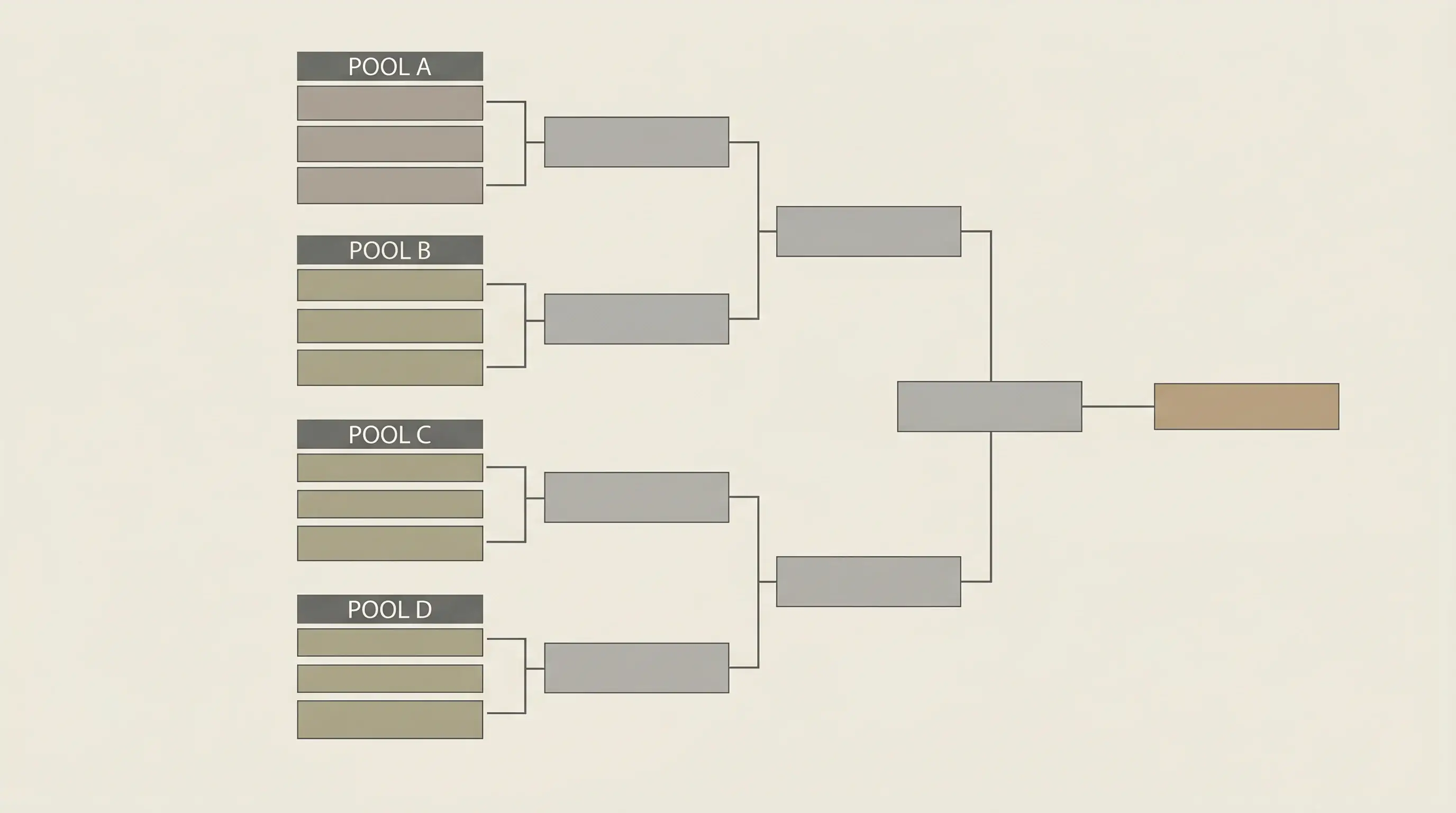
Under the old format, four pools of five teams played a long group stage and the top two advanced straight to the quarter-finals. The new design gives six pools of four, a shorter pool phase, and then a round of 16 that pulls in the pool runners-up and the best third-placed sides before the quarter-finals. As World Rugby chief executive Alan Gilpin put it, the change makes for a compelling and competitive pool phase where every match counts, and from a betting perspective that “every match counts” line is the crux of it.
Fewer pool games per team means less margin for error. In the old format a heavyweight could lose a pool match and still cruise through; now an early slip can drop a side into a treacherous round-of-16 tie against a fresh, dangerous opponent. The compressed window also changes player-welfare maths and rotation, which feeds directly into squad depth as a betting factor. Twenty-four teams, six weeks, an extra knockout round: the tournament is more volatile by design, and volatility is the raw material of futures value.
How the expansion reshapes the futures book
The old quarter-final cliff edge is gone, and with it the clean probability story that outright pricing used to rest on. A new round of 16 inserts an entire extra knockout layer between the pools and the business end, and that layer is where futures prices will misbehave.

Think about what the round of 16 does to an elite side’s path to the final. Previously a tier-one nation that topped its pool went more or less directly into a quarter-final against another strong team. Now even pool winners must navigate an additional knockout match, and that match is exactly the kind of fixture where an in-form tier-two side, on the right day, can spring an upset. More knockout games mean more variance, and more variance widens the realistic outcome distribution. The favourites’ outright prices should drift slightly longer than the old format implied, because each has one more banana skin to slip on.
That same logic creates genuine value lower down the board. Sides priced at 50/1 or 100/1 under the old structure had almost no realistic route to a deep run; under the new one, a strong pool campaign and a favourable round-of-16 draw can carry a dark horse into the quarter-finals, where outright “to reach the semi-final” and “to reach the final” markets become live. Gilpin has argued the reformat will produce a more compact tournament which will lead to more interest and bigger audiences, and bigger audiences mean deeper markets to attack. The smart early play is reading the draw, not just the headline winner price, and pricing the new knockout layer before the bookmakers fully account for it. For the underlying mechanics of how these long-range prices move, my guide to rugby futures and ante-post markets sets out the timing principles.
Audience, liquidity and why 2027 will be a deep market
A World Cup is the one moment the rugby betting market swells to football-like proportions, and 2027 is built to push that even further. The reason the futures book will be so liquid comes down to a viewership trend that has been climbing for years.
France 2023 became the most-watched rugby event in history, racking up 1.33 billion viewing hours across the tournament. That is not a plateau; it is a launchpad. Growth markets are pulling in fresh audiences too, with viewership for 2023 up sharply on 2015 in territories like Germany, up 27%, Italy, up 70%, and the United States, up a remarkable 136%. Each of those expanding audiences eventually translates into betting handle, and a compressed, expanded 2027 tournament is positioned to convert more of that attention into staked money than any World Cup before it.

For a UK punter the practical upshot is depth. When global viewing hours climb and a 24-team field gives bookmakers more fixtures, more pools and an extra knockout round to price, the result is a sprawling market: outright winner, to reach the final, pool winner, top tournament try scorer, golden-boot-style player markets, and match-by-match coupons that run for six straight weeks. Deep liquidity tightens the headline favourites but scatters soft prices across the long tail, which is exactly where a patient punter who has done the format homework can get set before the crowd arrives.
Finding angles before the prices sharpen
The best 2027 bets will be placed when the tournament still feels distant and the market is at its softest. By the time the pools are drawn and the warm-up tests are done, the easy value will already be gone.

I work three angles for an expanded World Cup. First, the round-of-16 path: once the draw is known, I look for a strong tier-one side lumped into a kind half of the bracket and a dangerous tier-two team sitting in a winnable round-of-16 slot, then I price “to reach the quarter-final” rather than the crowded outright winner. Second, the compressed schedule: six weeks favours squads with genuine depth over star-led teams that wilt under fixture congestion, so I fade thin squads in the later-round markets. Third, the long shots: the extra knockout layer gives more sides a plausible deep run, so ante-post “to reach the semi-final” prices on well-drawn outsiders carry value the old format never offered. Place early, read the draw harder than the headline price, and treat 2027 as a different tournament from every World Cup that came before it, because structurally, it is.
