
A punter once asked me why anyone would bet Draw No Bet in rugby when draws barely ever happen. It is a fair question, and the answer reveals a useful truth: these risk-reducing markets are often poor value in rugby precisely because the thing they protect against, the draw, is so rare. But “often poor value” is not “always,” and knowing the handful of situations where Draw No Bet and Double Chance genuinely earn their keep is a mark of a thinking punter rather than a reflexive one.
Both markets exist to soften the all-or-nothing nature of backing a winner, by either refunding your stake or covering two outcomes instead of one. They migrated into rugby from football, where draws are common and the protection is valuable, and they sit slightly awkwardly in a sport where ties are vanishingly rare. Understanding how they work, what they cost, and when that cost is worth paying is the key to using them well rather than overpaying for insurance against something that almost never occurs.
How rare draws really are
The whole logic of these markets rests on the frequency of draws, and in rugby that frequency is strikingly low, which is the first thing any punter considering them must internalise. Rugby ties are rare events, far rarer than in the football codes these markets were designed for.
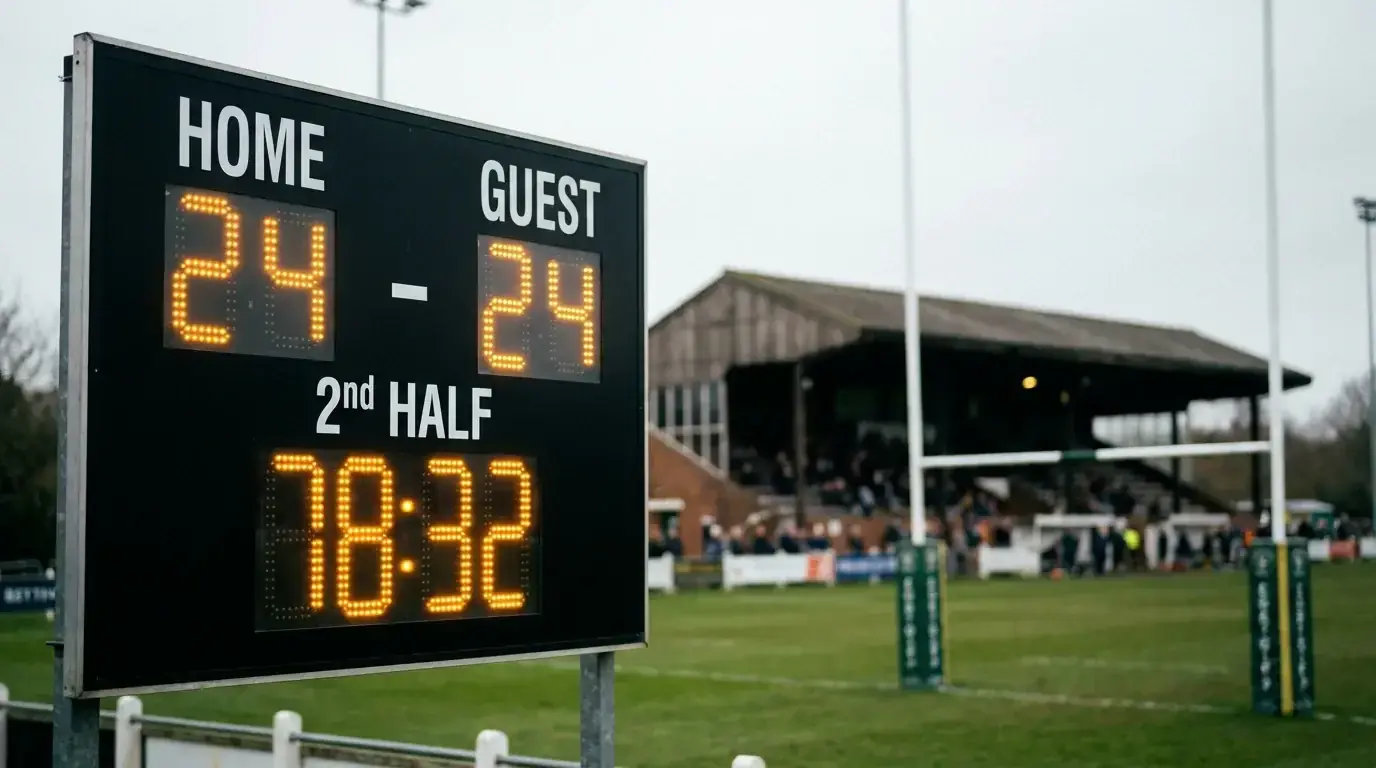
The reason lies in the scoring structure. Rugby produces points in varied increments, five for a try, two for a conversion, three for a penalty or drop goal, across a high-scoring eighty minutes, which makes it mathematically unlikely that two teams finish on exactly the same total. Compare that to a low-scoring sport where 1-1 and 0-0 are common results, and you see why draws cluster there but scatter to the margins in rugby. With match outcome and margin markets attracting around 60% of all rugby bets, the draw is a live consideration in pricing, but as an actual result it is the exception, not a regular outcome a punter needs to guard against on every fixture.
This rarity has a direct consequence for the value of draw-protection markets. In football, Draw No Bet offers meaningful insurance because the draw is a genuine and frequent third outcome, so paying a little in reduced odds to eliminate it makes sense. In rugby, you are paying that same insurance premium to protect against an outcome that may occur in only a small fraction of matches, which means the reduced odds frequently cost more than the protection is worth. The starting point for any rugby punter, then, is healthy scepticism: these markets charge you to remove a risk that is usually small, so the burden of proof is on finding the specific situations where the draw is likely enough, or your other reasons compelling enough, to justify the cost.
How Draw No Bet works
Draw No Bet does exactly what its name says: you back a team to win, and if the match ends in a draw, your stake is refunded rather than lost. It converts a three-outcome match into a two-outcome bet by removing the draw from the equation entirely.
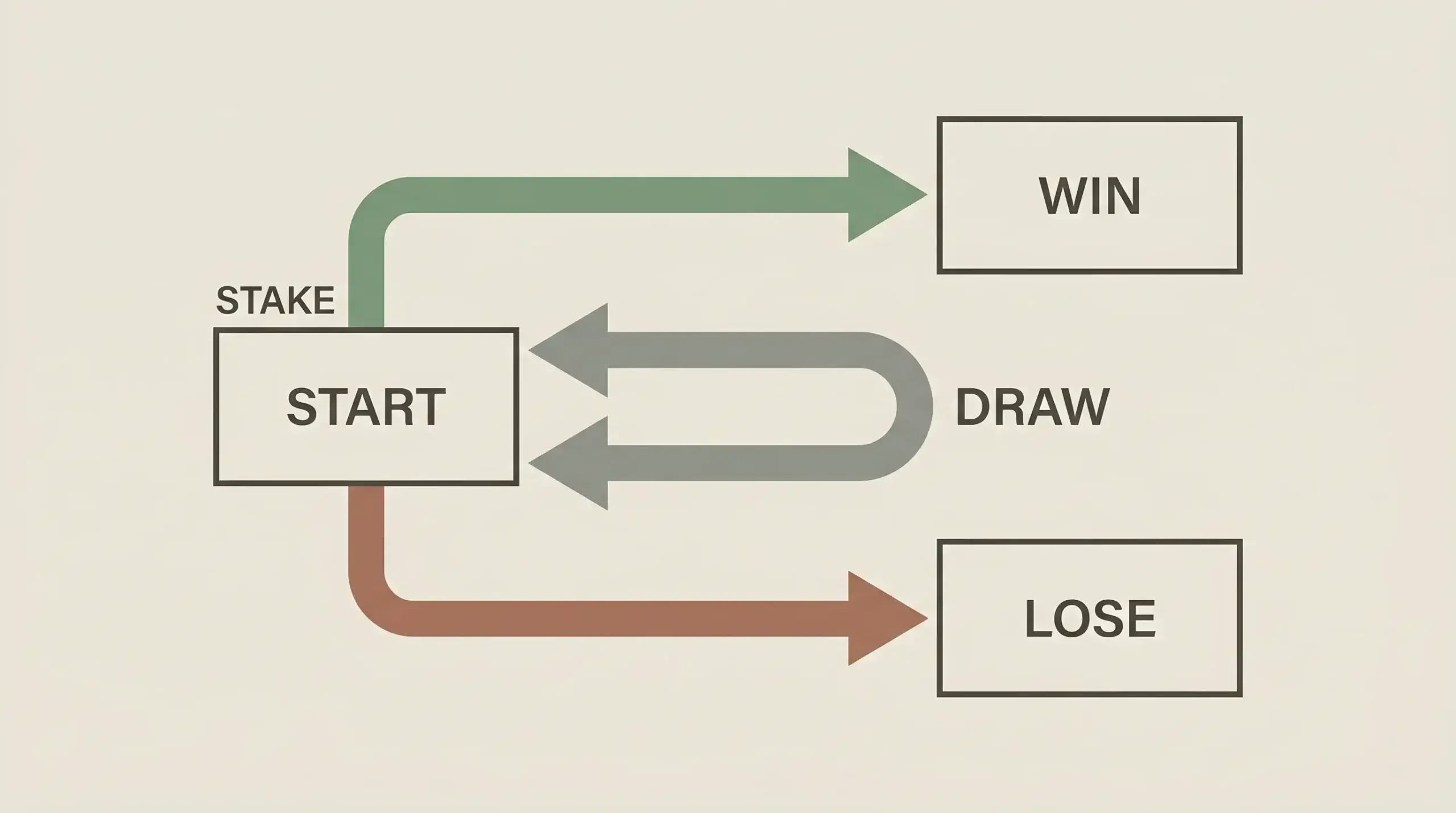
The mechanics are straightforward. You select a team on the Draw No Bet market, and there are three possible results. If your team wins, you collect at the Draw No Bet odds. If the match is drawn, your stake comes back in full, a clean refund with no profit or loss. If your team loses, you lose your stake as normal. In effect, the bookmaker has insured you against the single outcome of a tie, which is why the price on Draw No Bet is shorter than the straight win price on the same team, the reduced odds being the cost of that insurance. A team available at 6/4 to win outright might be around 5/4 on Draw No Bet, the difference reflecting the small probability of the refund scenario.
The way to think about Draw No Bet is as a trade: you accept a lower potential payout in exchange for protection against losing your stake to a draw. In a sport where draws are rare, that trade is usually unattractive, because you are sacrificing real odds value to insure against an unlikely event, and over many bets the cumulative cost of that unnecessary insurance erodes returns. The price compression between the straight win and Draw No Bet markets tells you exactly what the bookmaker thinks the draw is worth, and in rugby that compression is small precisely because the draw is improbable. Reading that gap is how you judge whether the protection is fairly priced or whether you are simply paying for peace of mind you do not need.
How Double Chance works
Double Chance takes a different approach to risk reduction, letting you cover two of the three possible match outcomes with a single bet rather than refunding against one. It widens your safety net instead of removing a single outcome.
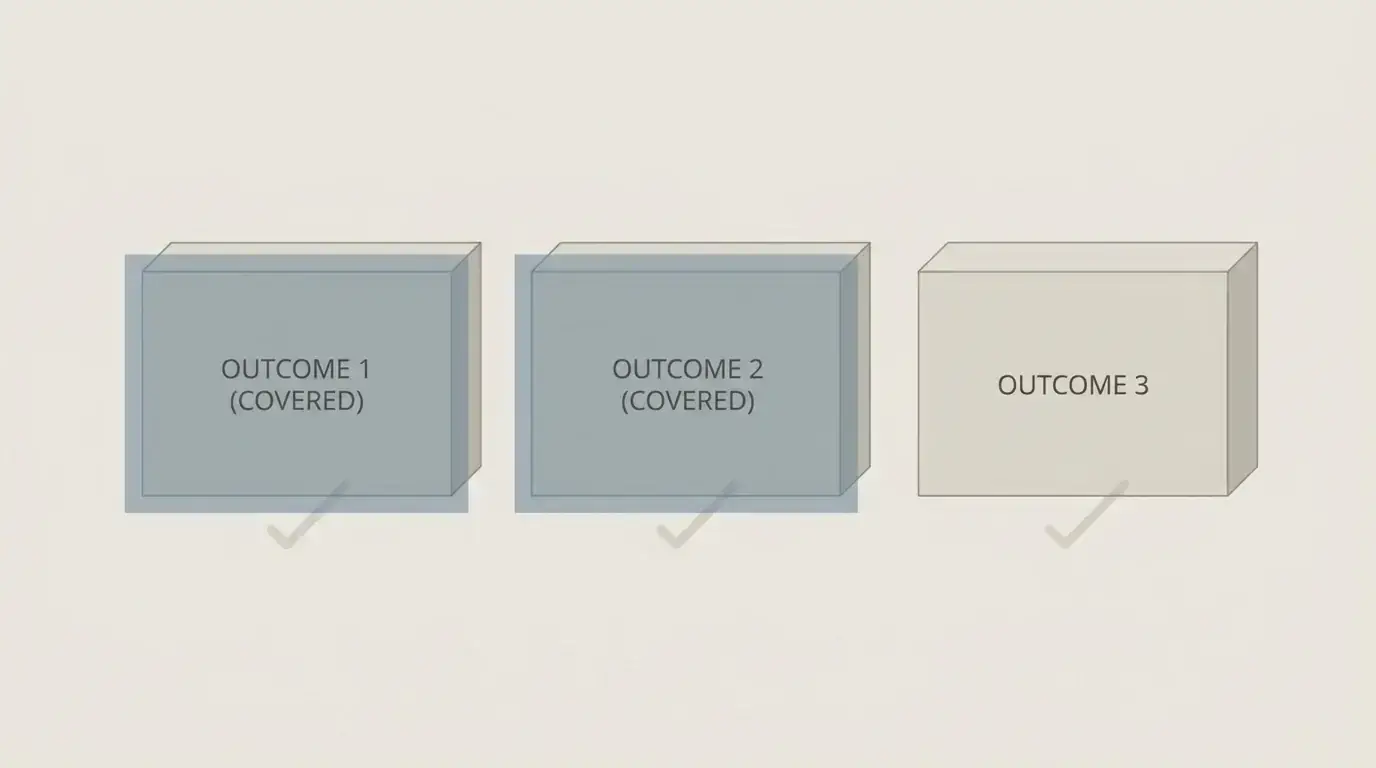
The market offers three combinations: home win or draw, away win or draw, or home win or away win, with the last covering both teams to win and only losing if the match is drawn. Backing a team on the home-win-or-draw option, for instance, means you collect if your team either wins or draws, losing only if they are beaten. Because you are covering two outcomes, the probability of winning the bet is higher, so the odds are correspondingly shorter, often considerably so on a clear favourite. Double Chance is the more cautious of the two markets, trading a meaningful chunk of potential payout for a substantially higher chance of the bet landing.

In rugby, Double Chance carries the same caveat as Draw No Bet, amplified. Since draws are rare, the “win or draw” options are only marginally safer than backing the straight win, because the draw they additionally cover so seldom happens, yet you pay for that coverage in sharply reduced odds. The home-win-or-away-win option, which loses only on a draw, is effectively a bet that the match will not be tied, and in rugby that is close to a near-certainty priced at very short odds, rarely worth the stake. Double Chance can occasionally make sense on a genuinely close fixture where you fancy a team to avoid defeat but are unsure of the win, but in most rugby matches the rarity of the draw means you are paying a heavy odds penalty to cover an outcome that adds little real protection. The market suits the cautious punter in specific spots, not as a default.
When these markets earn their place
Despite their general weakness in a low-draw sport, Draw No Bet and Double Chance do have their moments, and recognising them separates strategic use from blanket avoidance. The markets earn their place in the narrow band of situations where the draw risk is elevated or your specific read justifies the insurance.

The clearest case is a genuinely tight fixture between evenly matched sides where a draw, while still unlikely, is more plausible than usual, perhaps a cagey, low-scoring international expected to be decided by a single kick, or a match in atrocious weather where scoring is suppressed and the margins compress. In those rare spots, the draw probability rises enough that Draw No Bet’s insurance becomes more fairly priced, and a punter who fancies a narrow favourite can sensibly remove the small but real tie risk. As one gambling editor noted, the better-reviewed UK bookmakers offer a broad span of markets reaching from popular fixtures to more niche tournaments, and these risk-managed options are part of that breadth, useful tools when the situation fits rather than markets to use indiscriminately.
The other legitimate use is psychological and disciplinary rather than purely mathematical. A punter who finds the all-or-nothing nature of straight win betting leads them to over-stake or chase may find that Draw No Bet’s stake protection helps them bet more comfortably and sustainably, accepting slightly lower odds in exchange for a smoother experience that keeps their staking disciplined. That is a valid reason, provided you understand you are paying for it. My overall approach is to treat these markets as occasional tools, reaching for them on the tight, low-scoring fixtures where the draw is plausible and avoiding them on the routine matches where they simply cost odds value to insure against the improbable. They are not the trap some purists claim, nor the safe default beginners assume, but a specialist instrument for the specific fixtures that warrant them. For the market that prices the combined score these tight, low-draw games tend to produce, my guide to reading the rugby over/under line covers how to bet the totals that often signal a likely draw scenario.
