


The Premiership taught me a lesson early that I have never forgotten: in this league the regular season is a qualifying round, and the title is decided in three weekends of play-offs that bear almost no relation to the table you stared at all winter. Punters who bet the Gallagher Premiership like a points-accumulation grind, the way they would a football league, keep getting caught out. England’s top union competition is a domestic league with a knockout heart, and that hybrid shape is exactly what makes its markets worth understanding.
This is club rugby with its own rhythm, distinct from the cross-border sprawl of the URC or the depth of France’s Top 14. The fixtures are familiar, the venues are within a train ride, and the form is readable across a long season, which is part of the appeal for a UK punter. But the structure, regular season, then play-offs, then a single showpiece final, splits the betting into two very different games, and you price each one on its own terms.
The shape of England’s top flight
The first thing to know about the Premiership is that finishing top of the table does not make you champion. The league season ranks the clubs, but the trophy is settled in a play-off knockout, and that two-stage design governs every market on the board.
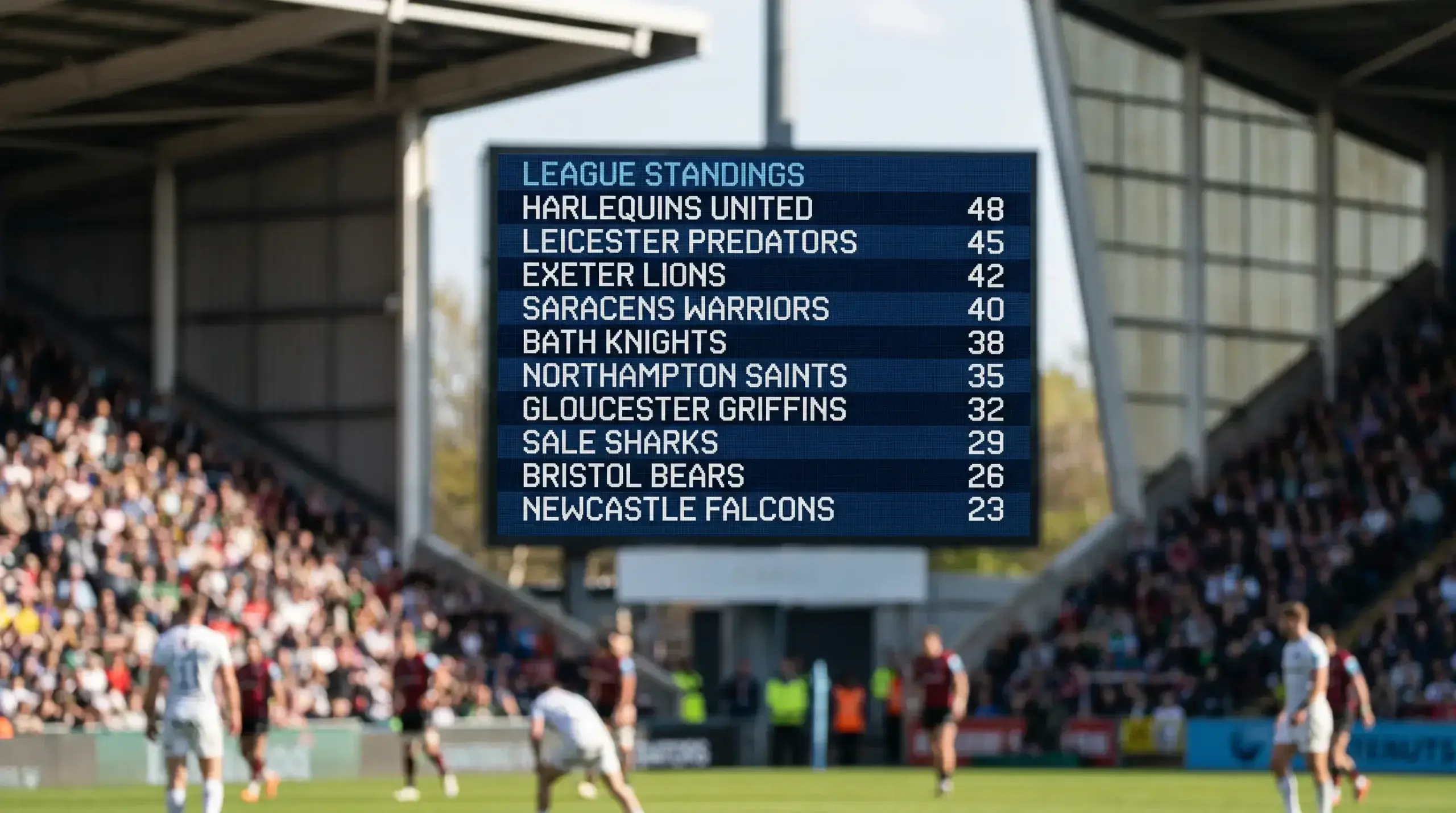
Clubs play a home-and-away regular season, accumulating league points with the same bonus-point system union uses elsewhere: four for a win, two for a draw, plus a bonus for scoring four tries and a losing bonus for finishing within seven points. The top finishers then qualify for the play-offs, with the higher seeds earning home advantage in the semi-finals before the final at a neutral showpiece venue. Relegation and promotion have shifted over recent seasons as the league’s structure has been reshaped, so the bottom of the table carries its own jeopardy and its own markets.
For a punter, the practical consequence is that the season produces two distinct betting products. There is the regular-season grind, where match markets, handicaps and totals run week after week and form is the king variable, and there is the outright “league winner” market, which is really a “who lifts the trophy” bet contingent on surviving the play-offs. Treating those as the same thing is the classic beginner error. The table tells you who is playing well; the play-off structure tells you who actually gets to win.
Match and outright markets across the season
Week to week, the Premiership is a handicap punter’s league. The talent gap between a top-four club at home and a struggling side away can be wide, and the moneyline rarely offers value on a heavy favourite, so the line is where the thinking happens.

Regional and domestic competitions like this one drive more than half of all rugby betting turnover, and the Premiership is a reliable engine of that volume through the autumn and spring. Operators respond with deep weekly coupons: match result, handicap, total points, winning margin, first and anytime try scorer, half-time/full-time and a stack of bet builders on the marquee fixtures. The handicap market in particular rewards close attention to home advantage, which is pronounced in English club rugby, and to squad rotation, because clubs juggle European commitments and international call-ups that thin their selections in ways the headline odds do not always capture.
The outright league market behaves differently. Early in the season it prices a blend of squad strength, recruitment and recent history, and it tends to be efficient near the top because the contenders are well known. The value, when it exists, sits a tier or two down, on a side with a kind early run of home fixtures or a squad returning to fitness. Because the title is play-off-decided, I treat the outright as a two-part bet: can this team finish high enough to earn a home semi-final, and can it then win two knockout games? Pricing those separately stops you overpaying for a strong regular-season side that historically wobbles when the format turns sudden-death.
The play-offs and the final showpiece
Everything in the Premiership funnels towards three weekends, and those three weekends operate by completely different rules to the eight months that precede them. Knockout rugby is its own discipline, and the markets reset accordingly.

Once the play-offs arrive, regular-season form becomes a guide rather than a guarantee. Home advantage in the semi-finals is significant, the higher seed hosting is one of the most reliable edges in English club rugby, but a single bad afternoon ends a season regardless of how the table looked. The semi-final markets reward backing seeded home sides at fair prices, while the upset value lies in away teams that have quietly built momentum into the run-in. Squad freshness matters more than usual here, because a club that has rotated sensibly through the back end of the season arrives sharper than one that has flogged a thin first XV.
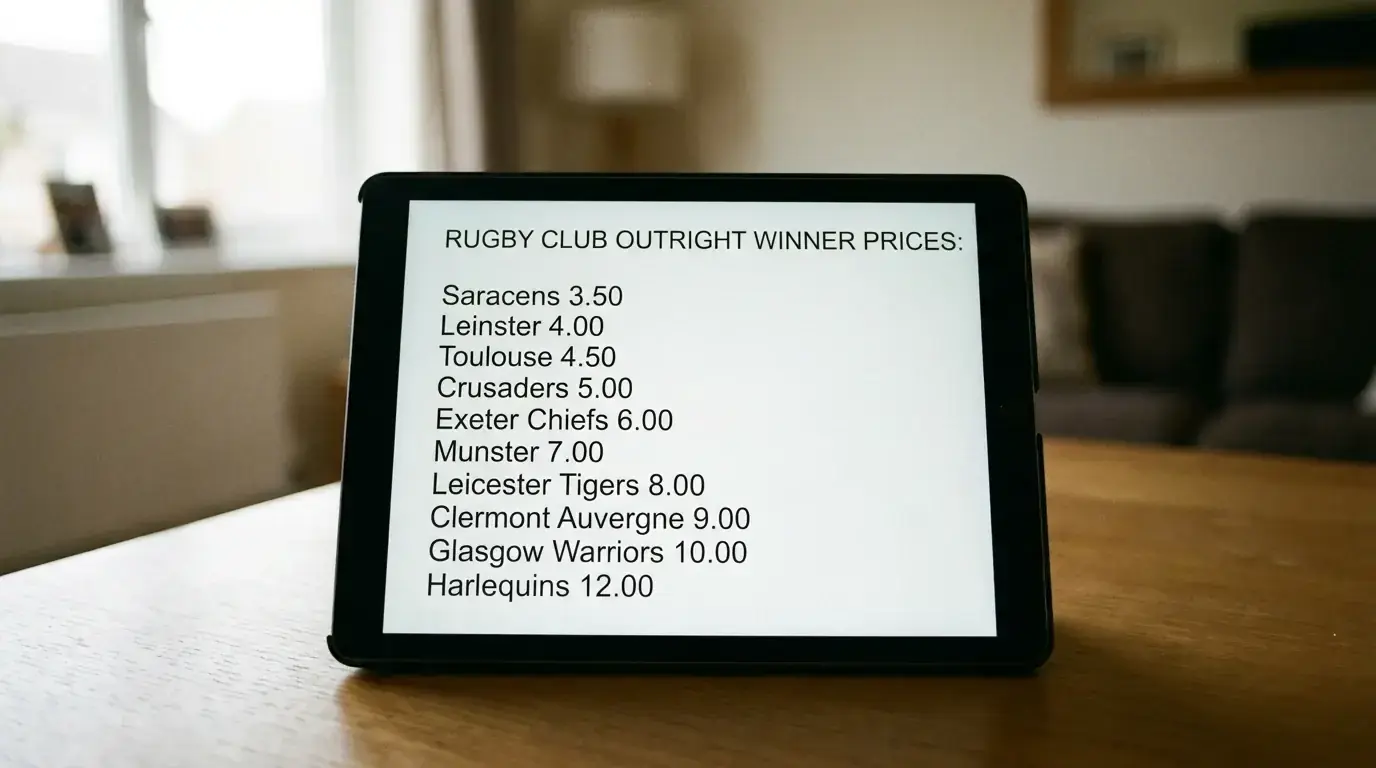
The final is its own market and one I price with caution. A neutral-venue, one-off showpiece flattens home advantage and amplifies occasion, which tightens the two finalists’ prices and makes the outright “final winner” a genuine coin-flip more often than the seedings suggest. The “to reach the final” markets, placed before the play-offs, frequently offer better value than the final itself, because you are buying a side’s path through one knockout game at a softer price rather than betting the showpiece once the crowd has already shortened the favourite. If you want to compare this knockout-heavy English model with a multinational league, my breakdown of how URC markets handle cross-border travel is a useful contrast.
Where the season hides its value
The Premiership’s calendar creates value windows that disappear if you are not watching for them. Form, fixtures and fatigue all move on a predictable seasonal cycle, and that predictability is the punter’s friend.

Both rugby codes hold steady demand in a UK market where football dominates with around £1.1 billion in gross gambling yield, and that steady, knowledgeable Premiership audience means the headline markets are fairly efficient. The soft spots appear at the season’s hinge points. International windows strip clubs of their best players unevenly, so a side with fewer call-ups can be underpriced against a depleted rival in those rounds. The festive congestion of back-to-back fixtures punishes thin squads, creating handicap value on the deeper benches. And the run-in, when some clubs are chasing a play-off spot and others are playing for nothing, scrambles motivation in ways the model-driven prices struggle to capture. Bet the calendar, not just the table, and the Premiership becomes one of the more readable domestic markets a UK punter can attack.
