


Every spring a friend of mine backs whoever tops the early Six Nations market to land the Grand Slam, and every spring I have to explain why he is conflating two completely different bets. Winning the championship and winning all five matches are not the same achievement, and the bookmaker prices them as separate markets for good reason. The Grand Slam is the harder feat, the longer price and, for a punter who understands its rhythm, one of the most satisfying season-long bets in rugby.
A clean sweep means beating all five rivals in a single campaign, with no slip-ups across two months of test rugby. The Triple Crown sits beside it as a related but distinct special market, and both reward an understanding of why perfection is so much rarer than mere success. Treat these as their own products rather than offshoots of the winner market, and you stop overpaying for outcomes that history says barely happen.
What a clean sweep actually requires
The Grand Slam is the only outcome in the Six Nations that demands flawlessness, and that single condition is what makes it a different animal from the championship itself. A team can win the title with a defeat on its record; a Grand Slam tolerates none.

Across five weekends a side plays each of the other five nations once, three at home and two away, or the reverse. To complete a Grand Slam, a team must win all five, home and away, against opposition that ranges from the tournament’s strongest to its most awkward. That is the crux of why the market prices so much longer than the outright winner: a side can stumble once and still lift the trophy on points difference, but a single loss anywhere kills the Slam outright. The away fixtures are usually where the dream dies, because winning in a hostile foreign stadium against a motivated home crowd is the steepest ask in the championship.
For a punter, the structure means the Grand Slam bet is really a bet on consistency under pressure rather than peak quality. The best team on paper does not always go unbeaten, because perfection requires surviving the one bad afternoon, the wet away day, the red card, the late drop goal, that derails even strong campaigns. I treat the Slam as a bet that compounds risk across five matches: a side might be 70% likely to win each game individually, yet the chance of winning all five together is far lower once you multiply those probabilities. That compounding is exactly what the long price reflects, and understanding it stops you treating the Slam as a marginally harder title win.
The Triple Crown as its own market
The Triple Crown is the Six Nations’ quiet sub-plot, and the bookmakers give it a dedicated market that many punters overlook entirely. It rewards a narrower achievement than the Grand Slam, which makes it a useful bet in its own right.
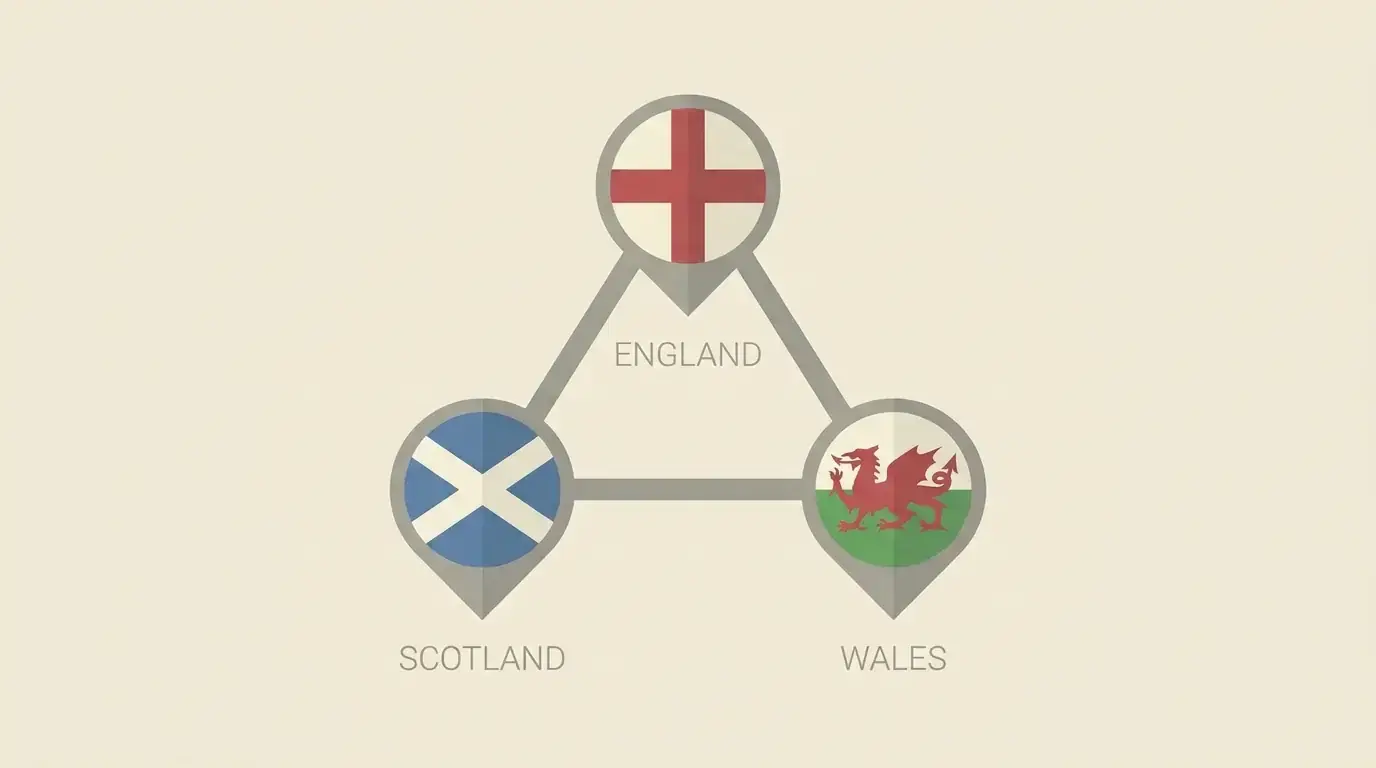
The Crown is won when one of the four home unions, England, Ireland, Scotland or Wales, beats the other three within a single campaign. France and Italy are irrelevant to it; the bet lives entirely inside the British and Irish rivalries. That narrower scope changes the maths completely. A home union only needs to win three specific fixtures rather than all five, so the Triple Crown is meaningfully more achievable than the Grand Slam and prices accordingly shorter, while still paying better than a simple match-by-match approach because it demands three wins strung together.
What I like about the Triple Crown market is that it can pay out even when a team’s wider campaign disappoints. A side can lose to France, draw nothing useful from its trip to face Italy’s improving pack, and still bank the Crown by beating its three home-union rivals. That partial-success quality makes it a softer landing than the all-or-nothing Slam, and it often holds value on a home union that is strong against its neighbours but vulnerable to the French. I price it by looking specifically at the three Crown-relevant fixtures, where they fall in the calendar, and which are home or away, rather than judging the team’s overall title credentials. The Crown and the Slam answer different questions, and a punter who separates them finds value the all-encompassing winner market hides. My detailed look at reading the Six Nations championship market covers how the outright winner price interacts with both of these specials.
Pricing perfection across five matches
Putting a number on a Grand Slam is an exercise in compounding probability, and the long odds you see reflect just how unforgiving that maths is. This is where the market’s pricing logic becomes a punter’s tool rather than a mystery.
Consider a hypothetical favourite the bookmaker rates as roughly 65% likely to win each of its five matches. Multiplying those independent chances together, 0.65 to the power of five, gives a combined Grand Slam probability of only about 12%, which translates to odds in the region of 7/1 in fractional terms, decimal 8.00, before the bookmaker’s margin. That is why even a clear tournament favourite, perhaps 6/4 to win the championship, can be 7/1 or longer for the Slam: the requirement to win every single match, including the tough away trips, slashes the probability dramatically. The prize money underlines how seriously the teams take a perfect run, with the 2025 championship pot reaching £18 million and the champions collecting £6.5 million of it, so the incentive to chase the Slam is real, but the structural difficulty keeps the price long.
The practical lesson is to respect the compounding. Punters routinely overrate Grand Slam chances because they focus on a team’s quality rather than the cumulative risk of five separate matches going right. I discount any Slam price by asking how the away fixtures look and whether the campaign includes a genuine banana-skin opponent capable of one upset. A side with both tough away games against in-form rivals is a far worse Slam bet than its championship price suggests, even if it is the best team in the field. Perfection is priced as a product of five outcomes, not a single one, and betting it well means thinking in multiplications, not averages.
Timing the bet on a clean sweep
The Grand Slam market rewards punters who position before the crowd and the calendar conspire to shorten the price. The seasonal surge of attention that the Six Nations brings is precisely what creates the early value, and then erases it.

The championship pushes rugby betting up alongside football and horse racing as one of the most active products of the February-to-March window, and that flood of seasonal money lands hardest once the tournament is underway and a contender has won its opening matches. After two or three rounds, a side still unbeaten with the Slam alive sees its price collapse as the bandwagon piles on, which is exactly when the value has already gone. The smart entry point is ante-post, before a ball is kicked, when the bookmaker is pricing on form and fixtures and the compounding risk keeps the odds generous on a genuine contender with a kind run of home games.
I work the timing in two ways. For a pre-tournament bet, I look for a strong side whose fixture list front-loads its toughest games at home, because surviving the hardest tests in front of a friendly crowd improves the realistic Slam probability more than the headline price implies. For an in-running bet, I largely stay out once the price has crashed, but I will occasionally back the field, the proposition that no Grand Slam happens at all, when two or more credible contenders are still unbeaten heading into a round where they face each other, because at most one can survive and the no-Slam outcome is frequently underpriced. Position early on the team, or late against the field, and the clean-sweep market becomes a thinking punter’s bet rather than a hopeful flutter.
